

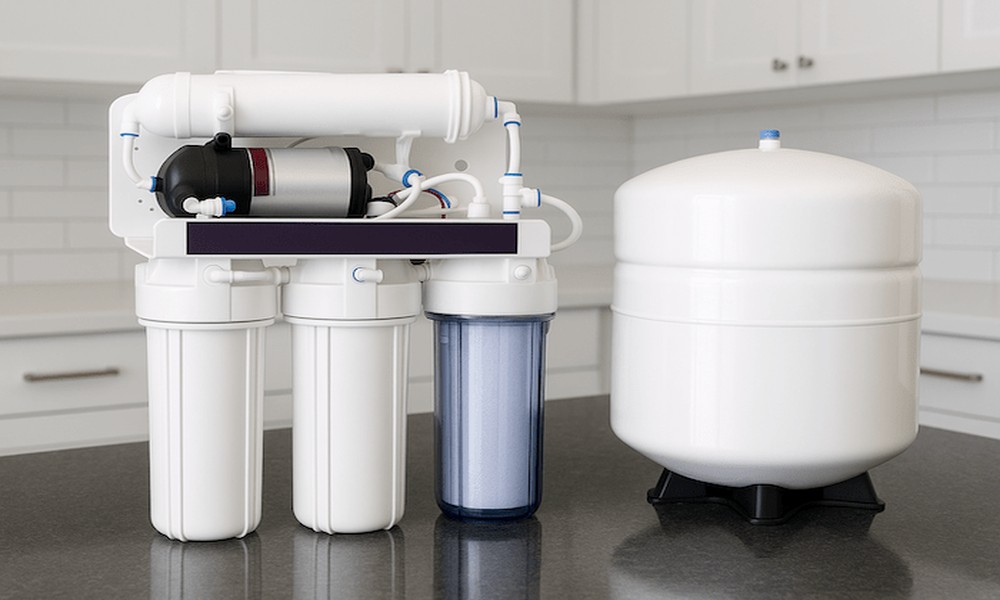
When it comes to improving the quality of your drinking water, two of the most popular options homeowners consider are reverse osmosis and carbon filtration systems. Both technologies are widely used in residential and commercial settings, but they serve different purposes and offer distinct advantages. If you’re trying to decide which solution is best for your home or business, understanding how each system works-and what it removes-is essential.
In this guide, we’ll break down reverse osmosis vs. carbon filtration, compare their effectiveness, and help you determine which system best fits your water quality needs.
What Is Reverse Osmosis?
Reverse osmosis (RO) is an advanced water purification process that uses a semi-permeable membrane to remove contaminants from water. The system forces water through this membrane, trapping impurities and allowing only clean water molecules to pass through.
What Reverse Osmosis Removes:
- Dissolved solids (TDS)
- Heavy metals (lead, arsenic, mercury)
- Fluoride
- Nitrates
- Certain bacteria and viruses
- Salt and minerals
Because of its fine filtration capabilities, reverse osmosis is often considered one of the most thorough water purification methods available. It’s commonly installed under kitchen sinks to provide high-quality drinking and cooking water.
Pros of Reverse Osmosis:
- Extremely high contaminant removal rate
- Improves taste and odor
- Ideal for areas with high TDS or well water
Cons of Reverse Osmosis:
- Slower filtration process
- Wastes some water during purification
- Removes beneficial minerals unless remineralization is added
What Is Carbon Filtration?
Carbon filtration uses activated carbon to absorb and trap contaminants through a process called adsorption. The carbon has a large surface area that captures impurities as water passes through it.
What Carbon Filters Remove:
- Chlorine
- Volatile organic compounds (VOCs
- Pesticides and herbicides
- Sediment
- Bad tastes and odors
Carbon filters are widely used in pitcher filters, refrigerator filters, faucet attachments, and whole-house systems. They are particularly effective at improving water taste and removing chemicals commonly found in municipal water supplies.
Pros of Carbon Filtration:
- Improves taste and smell
- Affordable and low maintenance
- No water waste
- Retains beneficial minerals
Cons of Carbon Filtration:
- Does not remove dissolved solids
- Limited effectiveness against heavy metals and fluoride
- Requires regular cartridge replacement
Which System Is Better for Your Home?
The answer depends on your water source and goals.
Choose Reverse Osmosis If:
- You have well water with high mineral content
- Your water test shows heavy metals or high TDS levels
- You want the purest drinking water possible
Choose Carbon Filtration If:
- You primarily want better-tasting water
- You’re on municipal water with chlorine
- You prefer a lower-cost solution with minimal waste
In many cases, the best solution is actually a combination system. Many reverse osmosis units include carbon pre-filters and post-filters to maximize purification and improve taste. This layered approach provides comprehensive protection.
Why Professional Water Testing Matters
Before investing in any filtration system, it’s important to test your water. A professional water analysis identifies specific contaminants, allowing you to choose a system that addresses your exact concerns instead of guessing.
Water quality can vary significantly depending on your location, plumbing, and source (city water vs. well water). A customized approach ensures you’re not overspending-or under-protecting-your household.
Reverse Osmosis vs. Carbon Filtration
When comparing reverse osmosis vs. carbon filtration, neither system is universally “better.” Instead, the right choice depends on your water quality and purification goals.
If you need comprehensive contaminant removal, reverse osmosis is the stronger option. If your main goal is better taste and chlorine reduction, carbon filtration may be all you need. For many homeowners, combining both technologies provides the best of both worlds-clean, safe, and great-tasting water.
If you’re unsure which solution fits your needs, consult a professional water treatment provider who can test your water and recommend a system tailored specifically to your home or business. Clean water is an investment in your health, comfort, and long-term peace of mind.
This post was written by a professional at OneGreenFilter – Water Purification Experts. At OneGreenFilter – Water Purification Experts, we provide healthy, great-tasting water for Bay Area families through expert residential water filtration. Established in 2017, we focus on doing three things right: selling the right system, installing it properly, and maintaining it long-term. Our services include whole-home water filtration, water softeners, and reverse osmosis Tampa designed for your home’s specific water needs. We’re locally owned, sustainability-focused, and trusted for our 5-star service. Enjoy free water testing, professional installation, and long-term peace of mind.